
Category: Uncategorized

  • ‘Natural’ birth control risks unwanted pregnancy, experts warn

    ‘Natural’ birth control risks unwanted pregnancy, experts warn


    As “natural” contraception methods become more popular, experts warn they carry a risk of unwanted pregnancy.

    After taking the pill for a decade, Elodie Monnier Legrand decided to try “natural” birth control, an increasingly popular trend that requires tracking fertility to avoid becoming pregnant.

    “I wanted my body to return to its natural state,” the French 30-year-old business owner told AFP.

    However after getting two abortions within six months, she discovered the app she was using had slightly miscalculated her fertility cycle.

    “It’s not an exact science,” Legrand said.

    She is one of a rising number of women who are abandoning hormonal contraception such as the pill.

    In France, 7.5% of women used natural contraceptive methods in 2023, rising from 4.6% in 2016, according to the INSERM institute.

    Helping drive this trend are influencers on social media, who often promote natural birth control as a way for women to “liberate” themselves from the hormonal effects of the pill.

    However experts warn that some common claims about the pill’s side effects represent misinformation—and that methods based on tracking fertility require strict adherence to be effective.

    Geoffroy Robin, a gynecologist at the University Hospital of Lille in France, told AFP that the interest in natural methods was fueled by “a climate of hormone-phobia.”

    He also pointed out that the pill had long been seen as a “tool of women’s emancipation.”

    Different methods

    Louise, a 26-year-old in France who did not want to give her surname, told AFP that “hormonal contraception was a complete disaster” for her.

    When she was 18, her body rejected a hormonal IUD. After getting an implant, she said she suffered from side effects including weight gain, mood swings and depression.

    For the last six years, she has been using the calendar method of natural birth control.

    This requires calculating the window when women are fertile—which is around 10 days a month—and abstaining from sex during this period.

    The temperature method involves daily checks to detect if women’s bodies have gotten a little warmer, which happens during ovulation.

    For the “Billings” method, women must inspect their vagina daily to see if there is a build-up of cervical mucus. The “sympto-thermal” method combines the latter two techniques.

    The embrace of natural contraception—also called fertility awareness—comes as the use of the pill has declined in many countries.

    A study published last year in BMJ Sexual & Reproductive Health estimated that hormonal contraception in England and Wales fell from 19% in 2018 to 11% in 2023.

    The research also suggested there was a link between the increasing use of natural birth control and a rising number of abortions.

    According to the experts AFP spoke to, natural techniques are significantly less effective than traditional methods.

    INSERM said they should only be considered by women “who accept a risk of pregnancy.”

    A review conducted by INSERM in 2022 found that less than 20% of around 100 fertility apps it analyzed made correct predictions about fertility cycles. Most apps also shared users’ data with third parties, often without their knowledge, the review found.

    “Just another business?”

    Robin warned that “natural methods are absolutely ineffective” for those with irregular cycles—roughly one out of every five women.

    And there are several factors that can skew measurements.

    For example, yeast infection or medication such as antihistamines can disrupt the secretion of vaginal mucus. Paracetamol, antibiotics or even a change in work schedule can alter a woman’s temperature.

    This means that natural methods are not suitable for everyone, the experts stressed, recommending that women considering a change consult their gynecologist.

    French sociologist Cecile Thome said the rise of natural contraceptive methods, driven by promises of “taking control of one’s body,” is part of the booming wellness industry.

    These arguments were compelling for Legrand, who paid seven euros a month for a fertility app and bought a “smart ring” for over 200 euros to monitor her temperature.

    After getting two abortions, she contacted the app’s customer service.

    “Their responses were very cold, it wasn’t very humane,” she said.

    The abortions were “hard on her body, hard psychologically,” she emphasized.

    While Legrand still finds the subject “super interesting,” she wondered if “ultimately, it is just another business.”

    © 2026 AFP

    Citation:
    ‘Natural’ birth control risks unwanted pregnancy, experts warn (2026, April 25)
    retrieved 25 April 2026
    from https://medicalxpress.com/news/2026-04-natural-birth-unwanted-pregnancy-experts.html

    This document is subject to copyright. Apart from any fair dealing for the purpose of private study or research, no
    part may be reproduced without the written permission. The content is provided for information purposes only.



    Source link

  • Hidden in hair follicles, immune ‘sentinel’ cells may help skin detect microbes

    Hidden in hair follicles, immune ‘sentinel’ cells may help skin detect microbes


    Credit: Henry Ry from Pexels

    Researchers at the School of Medicine at the University of California, Riverside have discovered previously unrecognized immune surveillance structures in the skin. Found within hair follicles, the cells resemble M (microfold) cells—specialized epithelial cells traditionally associated with the gut and airway tissues.

    The findings, published in Frontiers in Cell and Developmental Biology, suggest that the skin may use specialized “sentinel” cells located within hair follicle structures to monitor environmental exposure and microbial presence, expanding current understanding of how barrier tissues defend the body. The work was done in mice.

    Senior author Dr. David Lo, a distinguished professor of biomedical sciences, explained that unlike the gut and airway epithelium, which consists of a single-cell layer allowing relatively direct environmental sampling, the skin is composed of multiple stratified layers that form a more robust physical barrier.

    “This raises a long-standing question in immunology: how does the skin efficiently monitor external threats despite its thickness?” Lo said.

    Lo’s team proposes that hair follicles may act as localized “gateway” structures that concentrate both environmental material and immune sensing activity. Within these niches, the team identified M cell-like sentinel cells that appear to participate in localized immune responses, particularly to Gram-positive bacteria—bacteria that can cause a range of infections, from food poisoning to serious respiratory diseases.

    Hair follicles may represent a central hub for immune surveillance in the skin,” said Diana Del Castillo, the first author of the paper and a graduate student in Lo’s lab. “These structures bring together environmental exposure, immune sensing, and potentially even neural signaling in a highly localized environment.”

    While the research team is still characterizing the cells, early findings suggest they are part of a broader category of epithelial surveillance mechanisms that may exist across multiple tissues.

    The discovery also raises new questions about how immune and sensory systems may be integrated. Hair follicles are already known to contribute to touch sensation, and the newly identified structures appear to be in regions closely associated with nerve endings, suggesting a potential link between immune detection and sensory signaling.

    Lo said future work will focus on detailed anatomical mapping of these cells, particularly in whisker follicles in animal models since whiskers have dense innervation and complex structure.

    “We would like to better understand how these cells interact with surrounding nerve and immune cells, and whether similar systems exist in humans,” he said.

    Although the study is still in early stages, the findings may have future implications for understanding skin infections, immune disorders, and the development of topical therapeutics.

    “We’re only beginning to understand how these systems are organized,” Lo said. “But they suggest the skin is far more dynamically involved in immune surveillance than previously thought.”

    Del Castillo said the study highlights a potential shift in how scientists view barrier tissues—not as passive protective layers, but as active and highly specialized sensory and immune interfaces.

    “Our study adds to growing evidence that epithelial barriers across tissues share more diverse and dynamic immune-related functions than previously recognized, particularly in their ability to respond rapidly to microbial stimuli,” she said.

    Lo and Del Castillo were joined in the study by Hannah Kim and Sumaya Troy Alaama.

    The research was supported by funds from the UCR School of Medicine.

    The title of the paper is “Evidence for murine cutaneous immune surveillance localized to hair follicle epithelium.”

    More information

    Diana Del Castillo et al, Evidence for murine cutaneous immune surveillance localized to hair follicle epithelium, Frontiers in Cell and Developmental Biology (2026). DOI: 10.3389/fcell.2026.1721181

    Key medical concepts

    Hair FollicleM Cells

    Clinical categories

    DermatologyAllergy and immunology

    Citation:
    Hidden in hair follicles, immune ‘sentinel’ cells may help skin detect microbes (2026, April 25)
    retrieved 25 April 2026
    from https://medicalxpress.com/news/2026-04-hidden-hair-follicles-immune-sentinel.html

    This document is subject to copyright. Apart from any fair dealing for the purpose of private study or research, no
    part may be reproduced without the written permission. The content is provided for information purposes only.



    Source link

  • How a chemical reaction triggers brain inflammation in Alzheimer’s disease

    How a chemical reaction triggers brain inflammation in Alzheimer’s disease


    Connections between nerve cells in the brain (synapses, labeled green) usually deteriorate in the brains of Alzheimer’s mouse models (left). Stopping the formation of a molecule known as SNO-STING protects these connections between cells (right). Credit: Scripps Research.

    The brain has its own immune system, which detects threats and mounts a defense. A growing body of evidence has shown that in Alzheimer’s disease, those immune cells are chronically overactivated, causing inflammation that damages the connections between brain cells.

    Now, in a preclinical study using human Alzheimer’s brain cells, scientists at Scripps Research have identified a molecular switch—and potential drug target—responsible for driving that chronic inflammation.

    The research, published in Cell Chemical Biology on April 23, 2026, centers on a protein called STING, which normally functions as part of the immune system’s early-warning system. In the brains of people with Alzheimer’s, the team discovered that STING undergoes a chemical modification known as S-nitrosylation (or SNO, a reaction involving sulfur, oxygen and nitrogen) that promotes its overactivation. Blocking this chemical change to STING in a mouse model of the disease decreased neuroinflammation.

    “This is a new and important therapeutic target for Alzheimer’s disease,” says senior author Stuart Lipton, the Step Family Foundation Endowed Chair at Scripps Research and a clinical neurologist. “It’s exciting to see that blocking this switch in mice reduces inflammation and protects the very brain cell connections that are lost in Alzheimer’s, especially because we found the same pathway to be activated in human Alzheimer’s brain samples and in human stem cell-derived models.”

    Over three decades ago, Lipton, who’s also the founding co-director of the Neurodegeneration New Medicines Center at Scripps Research, discovered the S-nitrosylation process, in which a molecule related to nitric oxide (NO) binds to a cysteine amino acid in proteins, producing “SNO” and thus regulates the protein’s function. His lab has shown that SNO—which can be triggered by aging, neuroinflammation and environmental toxins such as air pollution and wildfire smoke—disrupts a variety of different proteins in the body. The modification, causing a veritable “SNO-STORM” to disrupt protein function, has been linked to several human conditions, including cancer, Parkinson’s disease and Alzheimer’s.

    In this new study, the team focused on the protein STING, which was previously linked to Alzheimer’s inflammation. Lipton’s group, led by postdoctoral researcher Lauren Carnevale, collaborated with Professor John Yates III, a leading mass spectrometry expert at Scripps Research and holder of the John Lytton Young Endowed Chair. They pinpointed exactly where on STING an S-nitrosylation reaction occurred, homing in on one specific building block of the protein: cysteine 148. When cysteine 148 is S-nitrosylated, they discovered, STING clusters into larger complexes and triggers inflammation.

    The team found high levels of the chemically modified form of STING (called SNO-STING) in postmortem brain tissue from Alzheimer’s patients, in human brain immune cells grown in the lab and exposed to Alzheimer’s proteins, and in a mouse model of the disease.

    In laboratory experiments, the team showed that the clumps of proteins found in the brain in Alzheimer’s—including amyloid-beta and alpha-synuclein—can themselves trigger the S-nitrosylation reaction in STING. This finding suggests that inflammation occurs in a cycle: initial protein clumps, coupled with environmental influences and aging, could cause inflammation that generates NO, driving S-nitrosylation of STING, which in turn drives more inflammation.

    The researchers then engineered a version of STING lacking cysteine 148 so it couldn’t be S-nitrosylated. When this modified protein was introduced into a mouse model of Alzheimer’s, brain immune cells showed significantly less inflammation, and critically, the connections between nerve cells (called synapses) were protected from degradation. This preservation of synapses is known to correlate with protection from the cognitive decline of dementia.

    “What makes this target particularly promising is that we can quiet the pathological overactivation of STING without shutting down the normal immune response,” says Lipton. “You still need STING to protect yourself from infections, and when we target cysteine 148, we’re not blocking the entire molecule; we’re just preventing STING from becoming overactivated.”

    Lipton’s group is now working to develop small molecules that block cysteine 148 for testing in preclinical models.

    Publication details

    Lauren N. Carnevale et al, Redox regulation of neuroinflammatory pathways contributes to damage in Alzheimer’s disease brain, Cell Chemical Biology (2026). DOI: 10.1016/j.chembiol.2026.03.017

    Journal information:
    Cell Chemical Biology


    Clinical categories

    NeurologyAllergy and immunology

    Citation:
    How a chemical reaction triggers brain inflammation in Alzheimer’s disease (2026, April 25)
    retrieved 25 April 2026
    from https://medicalxpress.com/news/2026-04-chemical-reaction-triggers-brain-inflammation.html

    This document is subject to copyright. Apart from any fair dealing for the purpose of private study or research, no
    part may be reproduced without the written permission. The content is provided for information purposes only.


    Source link

  • FDA fast-tracks review of new psychedelic mental health treatments

    FDA fast-tracks review of new psychedelic mental health treatments


    Damian Garde is a reporter at large, live and feature journalism, covering the global drug industry and contributing to STAT’s industry-leading events.

    The Food and Drug Administration will accelerate its review of psychedelic drugs developed by Compass Pathways, the Usona Institute, and Transcend Therapeutics for mental health disorders, as part of the Trump administration’s plan to boost access to the controversial yet promising medications.

    The agency will grant priority review vouchers specifically to Compass’ psilocybin product for treatment-resistant depression, Usona’s similar medicine for major depressive disorder, and an MDMA-like treatment for post-traumatic stress disorder from Transcend. 

    The FDA identified the medications receiving the vouchers, but not the companies developing them. Compass, Usona, and Transcend confirmed they received vouchers.

    STAT+ Exclusive Story


    This article is exclusive to STAT+ subscribers

    Unlock this article — plus daily coverage and analysis of the biotech sector — by subscribing to STAT+.

    Already have an account? Log in

    View All Plans

    To read the rest of this story subscribe to STAT+.

    Subscribe


    Source link

  • Do Vitamin C Supplements Help Reduce Anxiety?

    Do Vitamin C Supplements Help Reduce Anxiety?


    What are the risks and benefits of using vitamin C for depression and anxiety?

    “In adults, emerging evidence suggests that higher daily intake of fiber-rich fruit and vegetable servings is associated with lower incidences of anxiety, greater happiness, higher life satisfaction, and greater social-emotional well-being,” says a review in the journal Nutrients. So, “persuading people to consume more fruits and vegetables may not only benefit their physical health in the long-run, but also their mental well-being in the short-run,” concluded a study in Social Science & Medicine. Fruit consumption, for example, has a protective association with leading killers like heart disease, stroke, diabetes, and cancer, as well as depression. The question is why?

    Several mechanisms have been proposed. For example, one posits it’s the antioxidant and anti-inflammatory properties of produce, which scavenge the free radicals that are involved in some of the inflammation associated with depression. If that’s the case, what about simply taking vitamin C supplements? The brain has some of the highest levels of vitamin C in the body, so it’s thought that if extra vitamin C is consumed, it may have some sort of therapeutic role in brain diseases, especially given that it is not just an antioxidant, but also has other critical functions in the brain, such as helping to build neurotransmitters like dopamine. But you don’t know whether it actually helps until you put it to the test.

    One study found a beneficial effect of adding vitamin C as an adjunct treatment to an antidepressant, while another study found no benefit from vitamin C supplementation.

    So, there are mixed results for vitamin C and depression. Another study found no benefit when it came to depression, but those randomized to vitamin C instead of placebo pills did show a significant decrease in anxiety level. And this wasn’t only seen in that study.

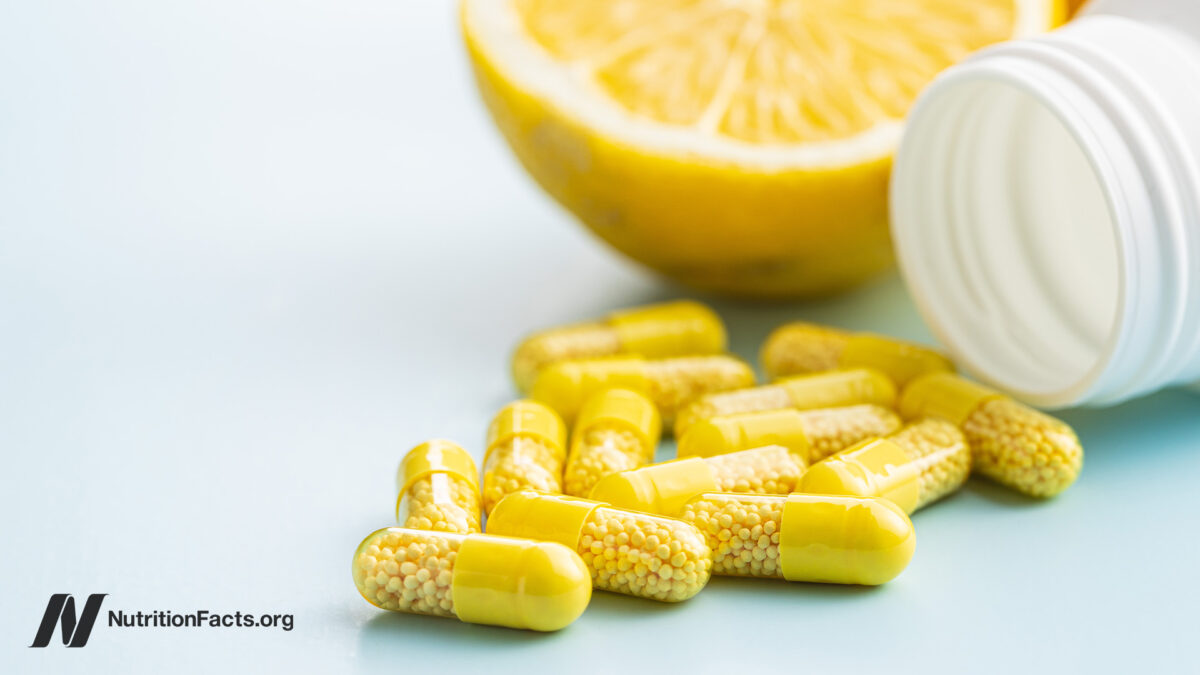
    The effects of oral vitamin C supplementation on anxiety in high school students were studied in a double-blind, randomized, placebo-controlled trial. The teens were given 500 mg a day of vitamin C or a placebo. That daily amount of vitamin C is about what you’d find in five oranges, four yellow kiwifruit or guavas, or one and a half yellow bell peppers. Within just two weeks, the vitamin C reduced anxiety levels compared to placebo, as well as provided a significant drop in heart rate.

    Given these data showing that vitamin C may have an anxiety-reducing effect, researchers sought to find out if a single dose could acutely affect emotional states. And indeed, within only two hours of taking some vitamin C, study participants experienced a significant drop in anxiety compared to placebo, though only among those who started out the most anxious in the first place, as you can see below and at 2:42 in my video Do Vitamin C Supplements Help With Anxiety?.


    As a bonus, vitamin C supplementation may lower our blood pressure a few points, but whole fruits and vegetables can do the same thing—and may even do it better for those who need it the most, as shown below and at 2:53 in my video.

    As I’ve shown previously, simply adding just two servings of fruits and vegetables a day can have psychological well-being benefits within only two weeks—and without the kidney stone risk associated with vitamin C supplements, though that appears to be only a problem in men.

    Doctor’s Note

    For more on vitamin C and on anxiety, check out related posts below.


    Source link

  • Student mental health trial finds conversational AI better than group therapy for anxiety

    Student mental health trial finds conversational AI better than group therapy for anxiety


    Conversational AI platform led to greater reductions in anxiety and improvements in well-being. Credit: Pixabay

    Over a billion people in the world are living with some form of mental crisis, and the numbers aren’t seeing a downward trend. It is all hands on deck to find potential ways to address the rising public health concern. A recent study revealed something quite encouraging. A conversational AI called Kai made a positive impact on the lives of university students dealing with mental health issues.

    Students who interacted with Kai reported lower anxiety and an overall improvement in well-being compared to those who received group therapy. They also experienced greater relief from depression and higher life satisfaction than students who received no treatment.

    The researchers are hopeful that conversational AI could become a scalable mental health resource, reaching more people while keeping support efficient and accessible. The findings are published in JAMA Network Open.

    Can AI help?

    Even though one in eight people suffers from mental health issues, only about 25% of those in need actually receive care. A major reason is the lack of trained professionals needed to address the urgent issue. Traditional one-on-one therapy also faces significant constraints from uneven access to care and the persistent social stigma that discourages many from reaching out for help.

    Mental health apps have attempted to improve access, but users often feel they are impersonal or not fluid enough to meet individual needs. This causes many people to drop from using such apps, as per studies, fewer than 4% of users stay active after the first month.

    Schematic depicting structural equation model linking therapeutic alliance, engagement, symptoms, and therapy need in the artificial intelligence group. Credit: JAMA Network Open (2026). DOI: 10.1001/jamanetworkopen.2026.6713

    The rise of generative AI has brought renewed focus to conversational chatbots, which scientists see as a promising way to expand access beyond traditional digital mental health tools that struggle to truly hold users’ attention. However, solid evidence remains limited regarding whether conversational AI can meaningfully reduce psychiatric symptoms and whether people can form a therapeutic alliance with chatbots.

    To study these aspects, the researchers recruited 995 university students who were experiencing emotional distress. To keep the students safe and ensure they received the right kind of support, those facing severe mental health challenges or active suicidal thoughts were not included and directed toward appropriate clinical care.

    One-third of the participants interacted with a conversational AI platform called Kai, developed by a separate company where one of the study’s authors worked. Through natural, back-and-forth text conversations, Kai provided personalized psychological support, drawing on approaches like cognitive behavioral therapy to tailor its responses to each user.

    The other two groups consisted of participants who attended traditional face-to-face group therapy sessions with professional psychologists, and a group that received no active treatment during the study.

    The results showed that conversational AI outperformed both group therapy and no treatment in reducing anxiety. For depression, both face-to-face therapy and AI led to significant improvements.

    Students using the AI also reported greater happiness and life satisfaction than those in the other groups. However, the AI failed to show improvement in PTSD symptoms, suggesting that trauma-related conditions may still require more specialized, human-led care.

    About 35% of those recruited dropped out before the follow-up, which may have influenced the results. While the findings point to the potential of conversational AI being introduced as a supportive tool for expanding access to mental health care, more robust research is needed to truly understand its impact.

    Written for you by our author Sanjukta Mondal, edited by Sadie Harley, and fact-checked and reviewed by Robert Egan—this article is the result of careful human work. We rely on readers like you to keep independent science journalism alive.
    If this reporting matters to you, please consider a donation (especially monthly). You’ll get an ad-free account as a thank-you.

    Publication details

    Anat Shoshani et al, Efficacy of a Conversational AI Agent for Psychiatric Symptoms and Digital Therapeutic Alliance, JAMA Network Open (2026). DOI: 10.1001/jamanetworkopen.2026.6713

    Journal information:
    JAMA Network Open


    Clinical categories

    PsychiatryPsychology & Mental health

    © 2026 Science X Network

    Citation:
    Student mental health trial finds conversational AI better than group therapy for anxiety (2026, April 20)
    retrieved 20 April 2026
    from https://medicalxpress.com/news/2026-04-student-mental-health-trial-conversational.html

    This document is subject to copyright. Apart from any fair dealing for the purpose of private study or research, no
    part may be reproduced without the written permission. The content is provided for information purposes only.


    Source link

  • Antibiotic resistance genes found in newborns within hours of birth, study shows

    Antibiotic resistance genes found in newborns within hours of birth, study shows


    Credit: Unsplash/CC0 Public Domain

    Antibiotic resistance genes (ARGs)—segments of DNA that help bacteria survive the effects of antibiotics—can be present in newborns within the first hours of life, according to research presented at ESCMID Global 2026.

    The study analyzed meconium samples from 105 infants admitted to a neonatal intensive care unit (NICU) within the first 72 hours of life between July 2024 and July 2025. The study was part of a multidisciplinary research project led by Professor Elias Iosifidis at Aristotle University of Thessaloniki, involving pediatric infectious disease specialists, neonatologists and molecular microbiology researchers.

    Meconium, the first stool passed by newborns, was traditionally thought to be sterile. However, recent molecular studies have detected microbial genetic material in meconium samples, suggesting that the neonatal gut may be exposed to bacteria during pregnancy.

    This early microbial exposure has been proposed as a potential contributor to the development of antibiotic resistance. ARGs have been detected in meconium samples, and their presence at this early stage may facilitate the spread of resistance through horizonal gene transfer between bacteria. Based on this, researchers screened the samples for 56 different resistance genes associated with commonly used antibiotics.

    “This is the largest study of its kind exploring the effect of hospital environment on the collection of ARGs in the neonatal gut,” lead author Dr. Argyro Ftergioti said.

    “We analyzed meconium samples within the first 72 hours of life to capture the earliest snapshot of microbial and genetic exposure in newborns. At this stage, the collection of resistance genes is mainly shaped by maternal transmission, delivery mode and very early hospital exposures.”

    The most common genes detected were oqxA (in 98% of samples) and qnrS (96%), which have been associated with resistance to some commonly used antibiotics. The study also identified several genes encoding beta-lactamases, enzymes that break down widely used antibiotics.

    Among these, the most prevalent were blaCTXM (55%), blaCMY (51%) and blaSHV (39%). Genes linked to resistance to carbapenems, a last-line class of antibiotics, were detected in 21% of samples. Each sample contained a median of eight resistance genes.

    “This finding suggests that a pattern of ARGs is already established at this stage. The neonatal gut harbors a diverse resistome, and the presence of clinically important ARGs so early in life is concerning,” Dr. Ftergioti added.

    “Although some ARGs were expected, their high prevalence across the majority of samples was striking—particularly for clinically critical genes offering carbapenem resistance.”

    The study also identified associations between resistance genes and several maternal and neonatal factors. The presence of the msrA (macrolide-streptogramin resistance) gene was linked with maternal hospitalization during pregnancy, while a higher number of resistance genes was associated with central venous catheter placement within the first 24 hours of life.

    Both findings likely reflect exposure to health care-associated microbes in hospital settings.

    “Surprisingly, resuscitation shortly after birth was associated with fewer resistance genes. We would caution that this finding should be interpreted carefully, however, as it may reflect differences in early microbial exposure or other clinical factors,” Dr. Ftergioti noted.

    Overall, the findings suggest that both maternal transmissions and early exposure to the hospital environment may contribute to the establishment of ARGs in the neonatal gut.

    “While further research is needed to understand how early carriage of resistance genes affects microbiome development and infection risk, these findings highlight the importance of surveillance, infection prevention and control in neonatal care,” concluded Dr. Ftergioti.

    More information

    Ftergioti, A., Simitsopoulou, M., Kontou, A., et al. (2026). Antibiotic resistance genes in meconium of newborns very early after admission to neonatal intensive care unit. Oral presentation. ESCMID Global 2026.

    Key medical concepts

    CarbapenemsHuman Microbiomes

    Provided by
    European Society of Clinical Microbiology and Infectious Diseases

    Citation:
    Antibiotic resistance genes found in newborns within hours of birth, study shows (2026, April 19)
    retrieved 19 April 2026
    from https://medicalxpress.com/news/2026-04-antibiotic-resistance-genes-newborns-hours.html

    This document is subject to copyright. Apart from any fair dealing for the purpose of private study or research, no
    part may be reproduced without the written permission. The content is provided for information purposes only.



    Source link

  • Improving oral care more than halves hospital-acquired pneumonia risk, major trial finds

    Improving oral care more than halves hospital-acquired pneumonia risk, major trial finds


    Credit: CC0 Public Domain

    A landmark trial presented at ESCMID Global 2026 shows that improving oral hygiene for hospital patients can reduce the risk of non-ventilator-associated hospital-acquired pneumonia (NV-HAP) by 60%.

    The study, involving over 8,000 patients, is the only multicenter randomized controlled trial (RCT) in a hospital setting to evaluate this approach and the largest RCT in this setting to date.

    NV-HAP is a form of pneumonia that develops at least 48 hours after hospital admission in patients who are not receiving mechanical ventilation. It is a common health care-associated infection linked to longer hospital stays, higher health care costs and increased mortality.

    Despite occurring more frequently and being equally as dangerous as ventilator-associated pneumonia (VAP), it has historically received far less research attention.

    To address this gap, researchers conducted the Hospital Acquired Pneumonia Prevention (HAPPEN) Study, a multicenter, stepped-wedge cluster RCT across nine wards in three Australian hospitals over a 12-month period, concluding in August 2025. Each ward introduced the intervention every three months. In total, 8,870 patients were included in the study, of whom 4,347 were in wards during the intervention period.

    In the intervention phase, patients were provided on admission with a toothbrush, toothpaste, educational materials and access to additional online resources. Health care staff received onsite training, access to online resources and practical support to improve the delivery of oral care. Control was usual practice.

    The program led to a substantial improvement in oral hygiene practices among hospital patients. The proportion of patients receiving oral care increased from 15.9% in the control to 61.5% in the intervention, with audits showing oral care was undertaken an average of 1.5 times per day.

    Importantly, exposure to the intervention was associated with a statistically significant reduction in NV-HAP risk. Incidence fell from 1.00 to 0.41 cases per 100 admission days-at-risk – representing an approximately 60% reduction.

    “One of the most encouraging findings from this study was the scale of improvement we were able to achieve,” commented lead study author Professor Brett Mitchell, Avondale University, Australia.

    “Through earlier work, we identified several barriers in hospitals, including limited access to suitable products, low awareness of the link with pneumonia and competing clinical priorities. By addressing these through education, practical resources and conversations with patients on admission, we were able to substantially increase oral care in hospital wards.”

    Explaining why improved oral hygiene can reduce pneumonia risk, Professor Mitchell said, “Typically, NV-HAP is the result of fluids from the mouth or throat entering the lungs, with hospital-associated respiratory pathogens more frequently detected in patients who are unable to clear oral secretions.

    These infections are thought to arise largely from a patient’s own microbiota rather than person-to-person transmission. Improving oral hygiene helps reduce these pathogens in the mouth, potentially lowering the risk of subsequent infection.”

    Looking ahead, Professor Mitchell commented, “Guidelines already recognize the role of oral care in preventing NV-HAP, but the evidence supporting these recommendations has been limited. Our study now provides robust evidence from a hospital setting. The next step is to better understand how structured programs can be effectively implemented and sustained across hospital wards.”

    More information

    Mitchell, B., et al. The hospital acquired pneumonia prevention (HAPPEN) study: a multi-centre randomised controlled trial. Oral presentation. ESCMID Global 2026.
    www.medrxiv.org/content/10.110 … 025.08.14.25333719v1

    Harriet Pittaway et al, Management of Non-Ventilated hospital acquired pneumonia, Clinical Infection in Practice (2024). DOI: 10.1016/j.clinpr.2024.100350

    Brett G. Mitchell et al, Strategies to reduce non-ventilator-associated hospital-acquired pneumonia: A systematic review, Infection, Disease & Health (2019). DOI: 10.1016/j.idh.2019.06.002

    Key medical concepts

    ToothbrushingPneumonia, Ventilator-Associated

    Provided by
    European Society of Clinical Microbiology and Infectious Diseases

    Citation:
    Improving oral care more than halves hospital-acquired pneumonia risk, major trial finds (2026, April 19)
    retrieved 19 April 2026
    from https://medicalxpress.com/news/2026-04-oral-halves-hospital-pneumonia-major.html

    This document is subject to copyright. Apart from any fair dealing for the purpose of private study or research, no
    part may be reproduced without the written permission. The content is provided for information purposes only.


    Source link

  • HIV treatment reduces accelerated biological aging by nearly four years, landmark study shows

    HIV treatment reduces accelerated biological aging by nearly four years, landmark study shows


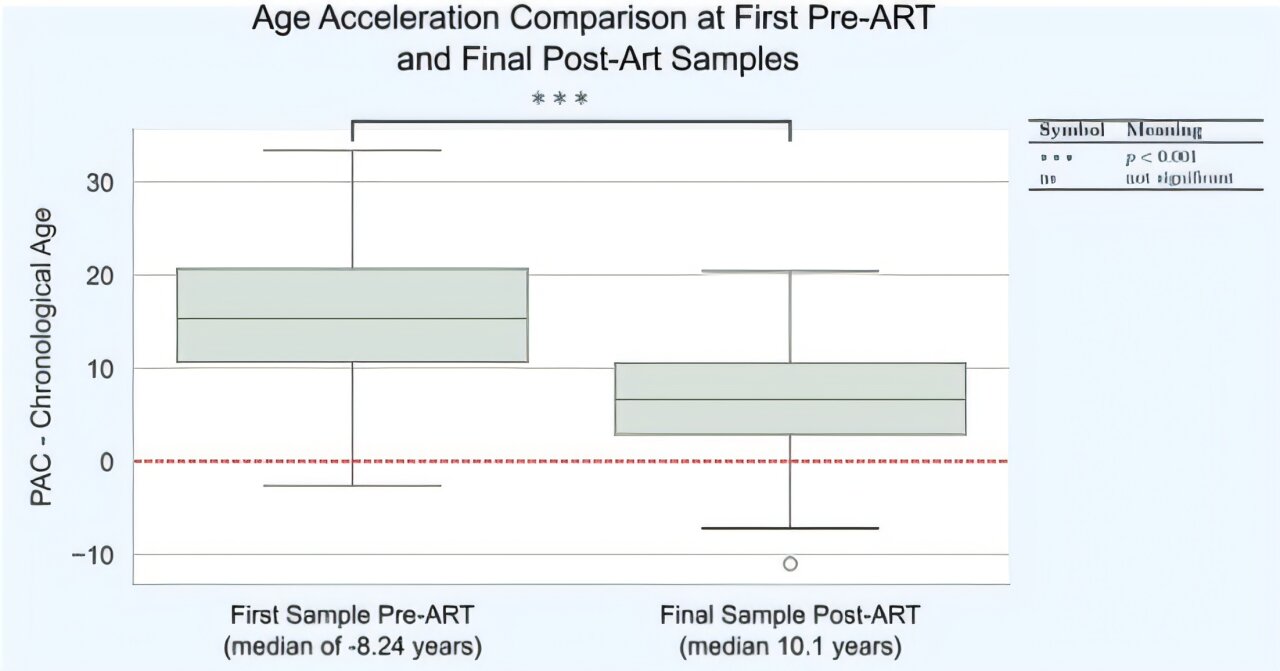
    Age Acceleration Comparison at First Pre-ART and Final Post-Art Samples. Credit: ESCMID Global

    A major study presented at ESCMID Global 2026 has found that antiretroviral therapy (ART) reduces accelerated biological aging in people with HIV (PWH) by nearly four years, a finding that could transform how clinicians monitor HIV treatment and long-term health outcomes.

    Researchers developed a plasma proteomic aging clock (PAC)—a tool that estimates biological age, reflecting physiological aging rather than chronological age—using patterns across hundreds of blood proteins. The model was applied to participants in the Swiss HIV Cohort Study (SHCS).

    The PAC was trained on 941 plasma samples from PWH receiving successful ART and then evaluated in an independent cohort of 80 participants who contributed 294 longitudinal samples spanning viremic pre-ART infection (when HIV was detectable in the blood) and suppressive post-ART phases.

    During untreated HIV infection, the PAC estimated that participants’ biological age was accelerated by a median of 10 years. After a median duration of 1.55 years of ART, researchers observed a statistically significant mean reduction of 3.7 years in proteomic age (95% CI 2.7 to 4.7; p = 0.0001).

    Trajectory analyses showed that proteomic age continued to move closer to chronological age with longer ART exposure, suggesting ongoing biological recovery with sustained treatment.

    Previous research suggests that PWH may experience accelerated biological aging, which is linked to chronic inflammation and a higher risk of age-related conditions including coronary disease, underscoring the clinical urgency of these findings.

    “This research demonstrates the importance of early start and optimal adherence to ART,” commented lead study author Dr. Barry Ryan, a postdoctoral researcher at EPFL, Switzerland.

    “We’re extremely fortunate to have a unique group from the SHCS who had samples collected for up to eight years before they started ART. With this group, we have measured the effect of untreated HIV infection and successful ART on telomere shortening, epigenetic aging and now proteomic aging. In each case, we have shown that uncontrolled HIV infection is linked to faster aging and that ART significantly slows this.”

    The PAC primarily captures changes in inflammatory signaling and drug metabolomic pathways. When compared with the team’s previously published epigenetic aging clock (EAC) in the same cohort, both clocks showed similar overall trends.

    However, the PAC was more sensitive to short-term immune changes, showing a faster increase during untreated infection and a more rapid decline once detectable HIV in the blood (viremia) was suppressed with ART.

    Importantly, the reversal of proteomic age acceleration after ART was not significantly associated with CD4+ or CD8+ T-cell count recovery, suggesting that the reversal reflects broader inflammatory and innate immune remodeling rather than T-cell reconstitution alone.

    “Our findings support the current consensus for starting ART promptly after HIV diagnosis,” explained Dr. Ryan. “The participants were closely monitored pre-ART, including CD4 and CD8 T-cell counts. Nonetheless, we observed accelerated proteomic aging irrespective of T-cell homeostasis, with acceleration already occurring nearest the time of HIV diagnosis.”

    The authors call for external validation of the PAC in more diverse global populations and for proteome-wide feature attribution studies to pinpoint the specific pathways driving HIV-related aging biology.

    “While specific pathways of reversal may vary by ancestry and population, the global trend of accelerated aging with untreated HIV and its attenuation after virological suppression is likely to generalize,” Dr. Ryan added.

    More information

    Ryan, B., et al. A plasma proteomic aging clock reflects reversal of accelerated aging in people with HIV under antiretroviral therapy. Oral presentation. ESCMID Global 2026.

    Key medical concepts

    Antiretroviral Therapy

    Provided by
    European Society of Clinical Microbiology and Infectious Diseases

    Citation:
    HIV treatment reduces accelerated biological aging by nearly four years, landmark study shows (2026, April 19)
    retrieved 19 April 2026
    from https://medicalxpress.com/news/2026-04-hiv-treatment-biological-aging-years.html

    This document is subject to copyright. Apart from any fair dealing for the purpose of private study or research, no
    part may be reproduced without the written permission. The content is provided for information purposes only.


    Source link

  • Cannabis legalization spurs innovation, but not always in ways that benefit patients or public health

    Cannabis legalization spurs innovation, but not always in ways that benefit patients or public health


    Credit: Unsplash/CC0 Public Domain

    Innovation in health care saves lives. But not all health innovations have enough evidence to actually benefit patients.

    Barriers to innovation are often higher in illicit or restricted markets, including cannabis, stem cells and cryptocurrencies. Researchers face higher costs, limited access to raw materials and data, and stricter regulations.

    Cannabis illustrates a particularly confusing tension between regulatory restrictions on one hand and research and innovation on the other.

    While the U.S. federal government still classifies cannabis as having “no accepted medical use,” many states have legalized it for medical or recreational use. Meanwhile, the Department of Health and Human Services obtained a cannabis-related patent in 2003 covering potential medical uses of cannabis compounds for protecting the brain from damage or degeneration. The patent was exclusively licensed for commercialization.

    Research and innovation on cannabis can take many forms. Clinical trials may study cannabis products as medical treatments, the effects of cannabis on its users, or factors related to abuse and dependence. Meanwhile, cannabis-related patents can be filed for wide-ranging purposes, such as chemical formulations, methods for production or new consumer products like edibles, beverages or vaporizers.

    But do these innovations actually benefit consumers and patients?

    We are economists studying how institutional changes affect innovation in different markets. Our recently published research found that legalization of recreational cannabis use appears to spur innovation, but primarily in ways that expand commercial opportunities rather than scientific understanding or health benefits for patients.

    Cannabis’ evolving legality in the US

    Cannabis is a plant that contains chemical compounds called cannabinoids. One such compound, tetrahydrocannabinol, or THC, produces psychoactive effects, while another compound called cannabidiol, or CBD, is often used to relieve anxiety and pain. However, there has been insufficient evidence on how effective cannabis products are in treating medical conditions, as well as a lack of consistent medical and dosing guidance.

    At the federal level in the U.S., cannabis has been classified as a Schedule I drug for over a half-century. This classification indicates that the federal government considers cannabis to have a high potential for abuse and no accepted medical use.

    As a Schedule I drug, there are significant restrictions on cannabis research. Researchers who seek to conduct cannabis-related clinical trials must obtain approval from both the Food and Drug Administration and the Drug Enforcement Administration, a process that can take over a year. They are also limited to using select varieties of cannabis obtained from federally authorized cannabis suppliers, and are generally prohibited from studying products available in state-authorized markets.

    There are ongoing pushes to relax these restrictions. Meanwhile, cannabis has been legalized to varying extents in many states. California became the first state to pass a medical cannabis law in 1996, allowing qualified patients to grow, possess and use cannabis for medical purposes. Many states followed suit in the late 1990s and early 2000s. As of June 2025, 40 states allow medical cannabis use.

    A number of states also allow recreational or nonmedical cannabis use among adults, which is regulated in similar ways to alcohol. Colorado and Washington enacted the first recreational cannabis laws in 2012, and there are 24 states that permit adults to use cannabis recreationally as of January 2026.

    Altogether, the legal landscape for cannabis in the U.S. has varied considerably across states and over time. States with more permissive laws can lower the costs of medical research and product development with cannabis, even if federal drug scheduling continues to restrict access. For instance, one group of Washington State University researchers asked participants to independently purchase and smoke cannabis from a legal dispensary before returning to their lab for study.

    State legalization and cannabis innovation

    To systematically examine how state legalization affects cannabis-related innovation, we compiled and analyzed datasets tracking cannabis-related clinical trials and patent applications.

    We distinguished different types of cannabis-related innovation. Specifically, we categorized cannabis-related clinical trials based on whether they focused on its potential as a treatment, its usage and effects, or its role in drug abuse. Similarly, we categorized cannabis-related patents based on whether they focused on chemical compounds, medical uses, methods or products.

    We also assessed public health concerns across three measures: patents explicitly involving THC; patents with a high risk of misuse; and patents targeting consumers directly, such as high-potency formulations, edibles or vaporizers.

    Then, we compared changes in cannabis-related innovation over time in states that legalized cannabis earlier with those in states that did so later or not at all. We measured innovation by counting the number of cannabis-related clinical trials and patent filings. We distinguished between medical and recreational legalization to assess how different policies affect innovation.

    Overall, we found that when states legalize cannabis for recreational use, cannabis-related patents increase—but mostly in commercial-oriented areas rather than health-focused ones. Patents were concentrated in market-oriented innovations like cultivation equipment and consumer products, rather than in clinical or science-based research. We also found some evidence that these innovations may raise public health concerns.

    Legalization did not result in meaningful increases in clinical trials. This suggests that barriers to cannabis-related clinical research—such as limited access to research-grade cannabis, limited funding and stigma around working with a federally controlled substance—remain substantial.

    Gaps between research and product

    As 420—signifying April 20, a day celebrating cannabis culture—approaches each year, public attention turns toward the legal status of cannabis.

    The legal landscape has evolved rapidly over the past few decades, and further changes are in the pipeline. Both the Biden and second Trump administrations have made efforts to reclassify cannabis as a Schedule III substance, which would indicate that it has an accepted medical use and low-to-moderate potential for dependence.

    These reevaluations of the legality of cannabis come at a critical time. There has been an explosion of recreational cannabis products in recent years, including increasingly potent strains and a wider variety of ways to use cannabis. Meanwhile, critical research on the health and safety of cannabis use has lagged due to heavy restrictions accompanying Schedule I status.

    This gap between medical research and product innovation can have significant public health consequences. The 2019 to 2020 outbreak of lung injuries related to e-cigarette or vape use was linked partly to the use of unregulated or illicit cannabis vaping products. These harms highlight the risks of allowing product innovation for controlled substances to outpace scientific understanding.

    Policies that significantly reduce obstacles to clinical research can in turn help close the widening gap between cannabis markets and addressing their public health implications.

    Provided by
    The Conversation


    This article is republished from The Conversation under a Creative Commons license. Read the original article.

    Citation:
    Cannabis legalization spurs innovation, but not always in ways that benefit patients or public health (2026, April 19)
    retrieved 19 April 2026
    from https://medicalxpress.com/news/2026-04-cannabis-legalization-spurs-ways-benefit.html

    This document is subject to copyright. Apart from any fair dealing for the purpose of private study or research, no
    part may be reproduced without the written permission. The content is provided for information purposes only.


    Source link